
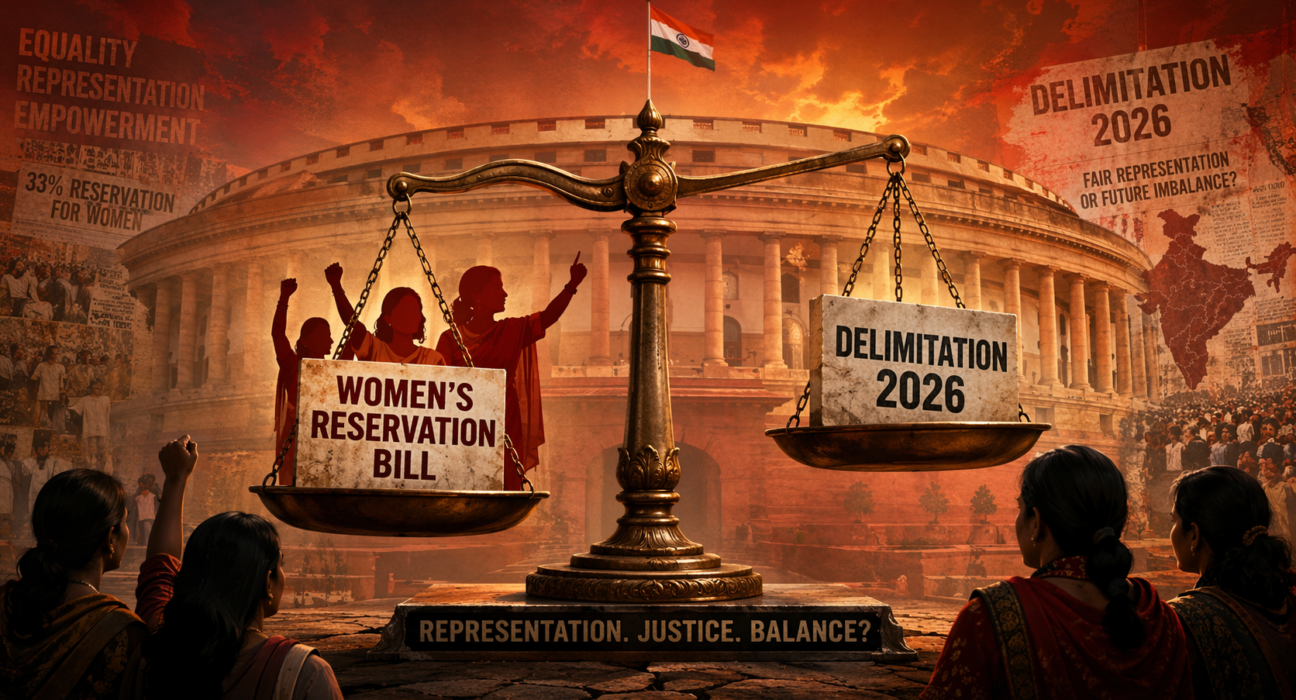
The Women’s Reservation Bill has been celebrated as a landmark step toward gender equality in Indian politics. However, the decision to link its implementation with the delimitation process has sparked a major political debate. Opposition parties and leaders like Kalvakuntla Kavitha argue that this linkage could delay justice rather than deliver it.
This issue is no longer just about women’s representation—it has evolved into a broader discussion on democracy, fairness, and political intent.
What Does the Linkage Mean?
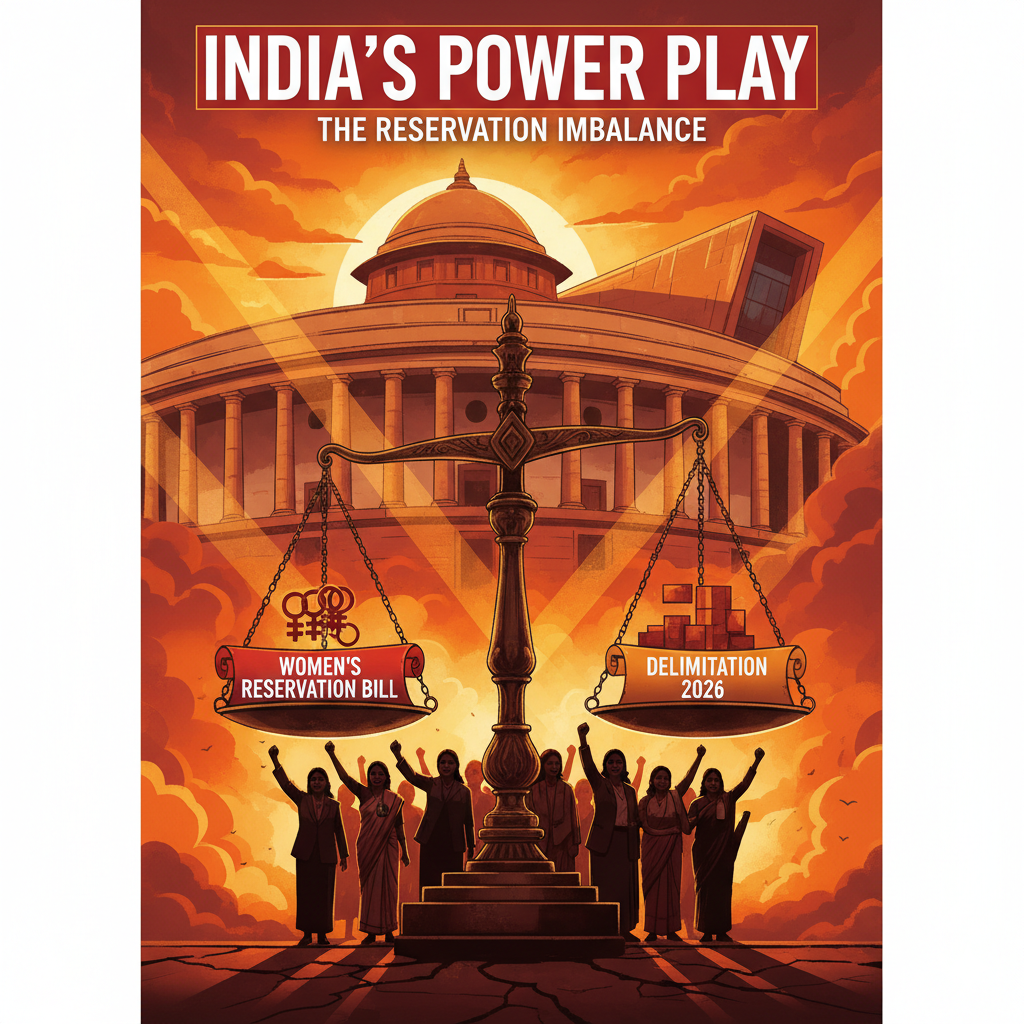
The Women’s Reservation Bill promises 33% reservation for women in Parliament and state assemblies. But there is a condition: it will only be implemented after the next delimitation exercise.
Delimitation is the process of redrawing constituency boundaries based on population data. Since the next delimitation is expected only after a post-2026 census, this effectively postpones the implementation of the bill.
In simple terms, a reform meant to empower women immediately could now take years to become reality.
Why Is the Opposition Concerned?
Delay in Women’s Empowerment
Opposition leaders argue that linking the bill to delimitation unnecessarily delays women’s entry into legislative power. They believe reservation should be implemented immediately, without waiting for administrative processes.
Fear of Political Strategy
There are concerns that delimitation could be used to reshape constituencies in a way that benefits the ruling party before women’s reservation comes into effect.
Impact on Federal Balance
Southern states, which have controlled population growth effectively, fear losing seats after delimitation. This raises questions about fairness and equal representation across regions.
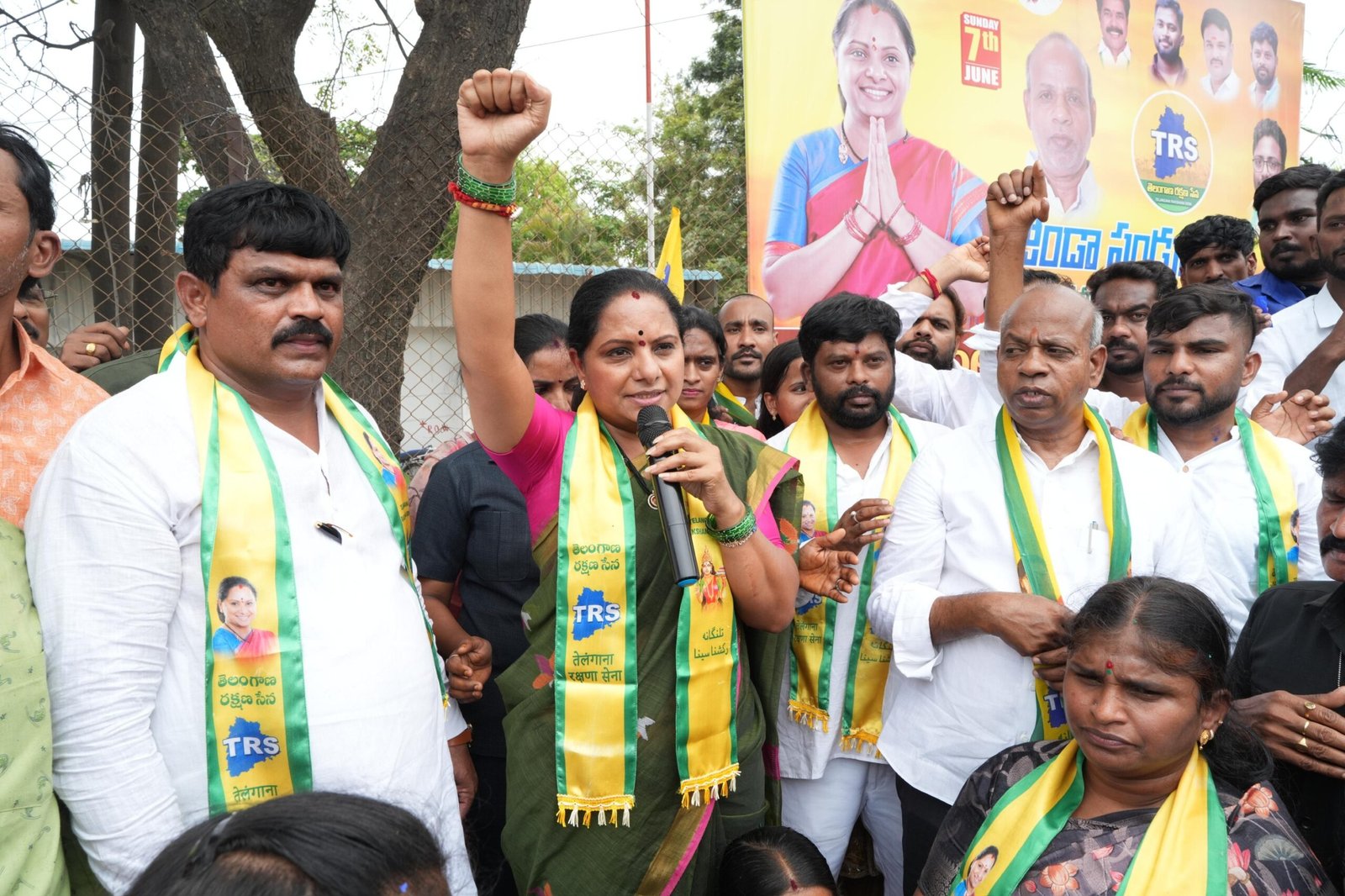
Kalvakuntla Kavitha’s Strong Opposition
Kalvakuntla Kavitha has been one of the most vocal critics of this linkage.
She has consistently argued that:
Women’s reservation should not be delayed under any circumstances.
Linking it with delimitation creates unnecessary hurdles.
The move raises doubts about the true intention behind the bill.
Representation should also include sub-quotas, especially for OBC women, to ensure inclusivity.
Through public campaigns and political statements, she has tried to shift the narrative from celebration of the bill to questioning its implementation strategy.
Broader Effects of This Debate
Slower Progress on Gender Equality
If implementation is delayed, the pace of women’s political empowerment will slow down significantly.
Rising Regional Concerns
The issue has deepened tensions between states, especially regarding how representation will change after delimitation.
Increased Political Polarization
A reform that once had broad support is now a subject of intense political disagreement, dividing parties along ideological lines.
Greater Public Awareness
On the positive side, the debate has brought attention to complex topics like delimitation and representation, encouraging more public engagement.
The Bigger Question
At the heart of this issue lies a crucial question:
Should a social justice reform like women’s reservation depend on a technical process like delimitation?
Opposition voices argue that justice delayed is justice denied, while supporters of the linkage claim it ensures structural consistency.
The linking of delimitation with the Women’s Reservation Bill has transformed a historic reform into a contested political issue. While the government views it as a procedural necessity, critics—including Kalvakuntla Kavitha – see it as a delay that weakens the bill’s purpose.
The way this debate unfolds will play a key role in shaping not just women’s representation, but also the future of democratic reforms in India.